
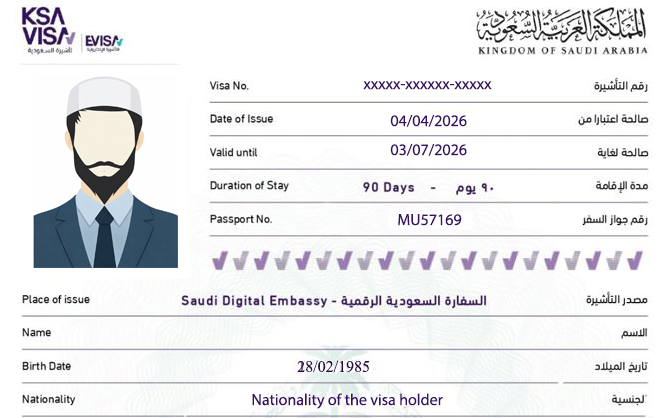
Umrah visa 2026 is a special visa issued by Saudi Arabia exclusively for Muslim pilgrims to perform Umrah pilgrimage. Whether you’re planning regular Umrah visa through approved agents or using Saudi eVisa (tourist visa that allows Umrah for 66+ nationalities), this complete guide covers all requirements, documents, fees, and application steps as of April 10, 2026.
This article reflects current rules – Saudi regulations change by season and nationality, so always verify final requirements with official platforms before applying.
Umrah Visa Types 2026
Regular Umrah Visa
A regular Umrah visa is a pilgrimage‑specific visa issued by the Saudi authorities exclusively for Muslim travelers who wish to perform Umrah. It is typically applied for through approved travel agents or via the official Nusuk platform, and the visa is usually tied to a pilgrimage package (hotel, transport, and Umrah‑only permissions). This visa is valid for a limited period (usually around 30 days from entry) and is not valid for work or business activities in Saudi Arabia.
eVisa (Tourist Visa for Umrah)
The Saudi eVisa (tourist visa) is a general‑purpose electronic visa that allows visitors to enter Saudi Arabia for tourism, including the performance of Umrah. It is issued through the official Saudi eVisa portal and is currently available to citizens of more than 60 eligible countries. Holders of an eVisa may stay in the Kingdom for up to 90 days and are permitted to perform Umrah as long as they meet the standard Umrah‑season rules and entry deadlines.
Yes, travelers can usually still opt for a regular Umrah visa if they prefer a dedicated pilgrimage visa, but the eVisa offers more flexibility for those who also want to explore other cities during their stay.
Validity & Duration
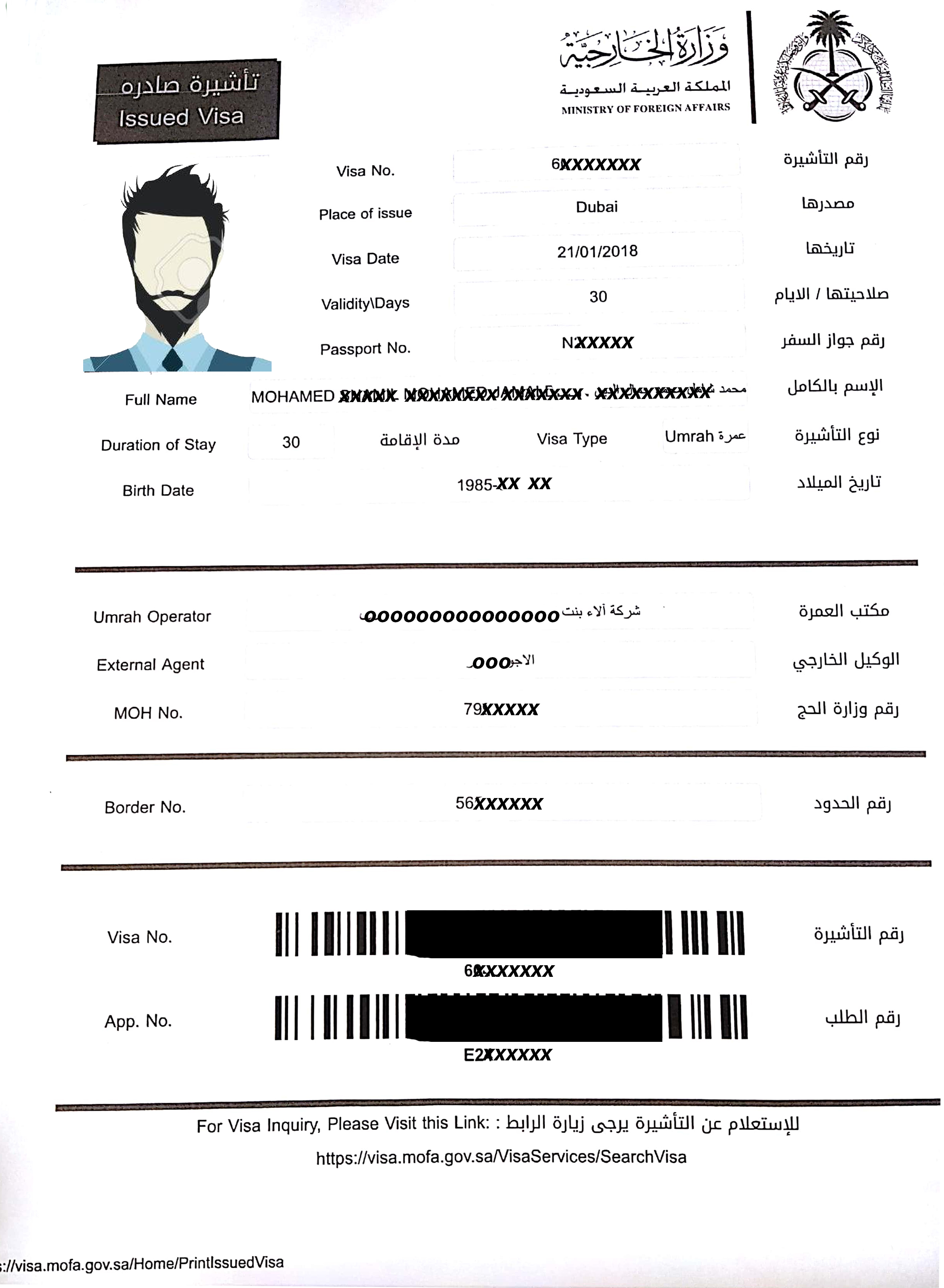
An Umrah visa issued in 2026 is typically valid for 30 days from the date of issue, which means you must enter Saudi Arabia before that expiry date. This validity window is consistent across most regular Umrah visas issued through approved agents and the Nusuk platform, though the exact period may vary slightly by nationality and visa type.
Once you land in Saudi Arabia, your permitted stay is generally 30 days from the date of entry, even if your visa was issued earlier. However, it is strongly advisable to limit your stay to about 20 days whenever possible, to avoid the risk of overstaying. Overstaying your visa is a punishable offense and can affect future visa approvals.
For Umrah travel during Ramadan 2026, the visa is usually parameterized so that your departure must occur on or before the last day of Ramadan; you are not allowed to remain in Saudi Arabia on Umrah visa for Eid‑ul‑Fitr. If you are on a Saudi tourist eVisa that allows Umrah, the underlying validity is usually 90 days, but the actual Umrah‑season entry and exit windows are set by the authorities each year, so you must still follow the official entry and departure dates announced for that Umrah cycle.
Key Conditions
An Umrah visa is issued only for the purpose of performing Umrah and does not allow work, business, or employment in Saudi Arabia under any circumstances. Using an Umrah visa for commercial activities is a violation of Saudi regulations and can lead to fines, deportation, or future visa bans.
You must enter Saudi Arabia before the visa expiration date and plan your flights accordingly, taking into account any time‑zone differences between your country and Saudi Arabia. You are also required to exit before the visa‑permitted stay ends, and it is strongly recommended to leave well before the final day to avoid overstaying, which is treated as a legal offense.
Travelers must respect the seasonal entry and exit rules set by Saudi authorities for the Umrah season, including cut‑off dates before and after Hajj, and must not exceed these limits. If you are traveling on a family or group package, you are expected to stay within the approved itinerary and return with your group unless you hold a valid multi‑entry or tourist visa that explicitly allows independent travel.
Women Umrah Visa Rules
Women may perform Umrah in 2026, but the exact conditions can vary by nationality, visa type (regular Umrah visa vs eVisa), and the rules applied by the issuing authority or travel agent. Saudi Arabia has relaxed some earlier restrictions, so policies are more flexible than in past years, but travelers should still plan according to the latest guidance for their country.
Under 45 years
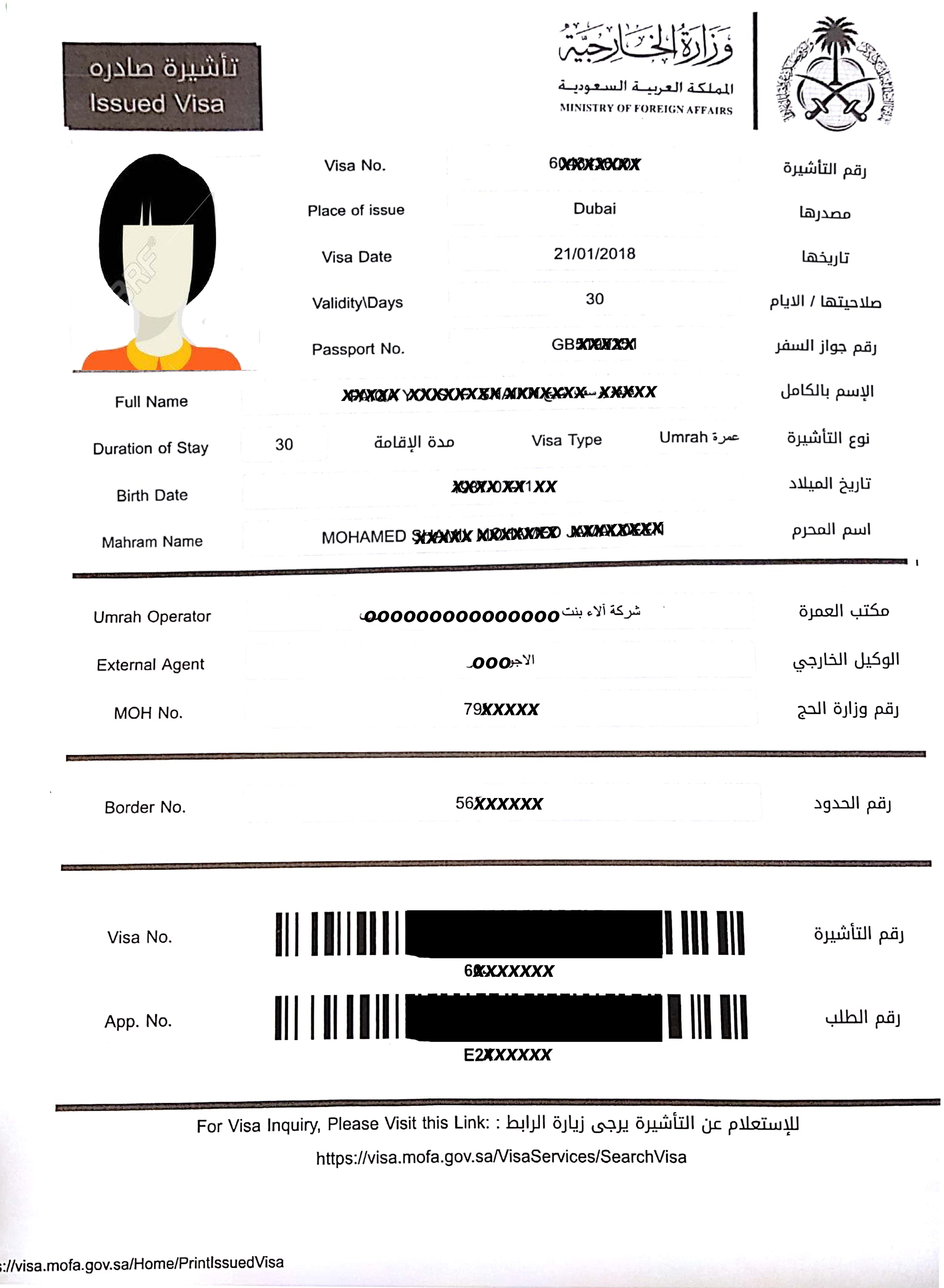
For women under 45, many countries and operators still require that they travel with a mahram (such as a father, husband, brother, or other close male relative) on an Umrah visa or as part of an approved pilgrimage group. Some authorities or agents may instead require a no‑objection certificate (NOC) from a mahram even if the woman is flying in a supervised group. Because rules differ by nationality and visa channel, women under 45 should confirm with their approved agent or the official Saudi portal before travel.
45+ years
Women aged 45 and above are generally allowed to perform Umrah without a mahram, as long as they travel through an approved travel agency or a supervised group (group Umrah package). In many cases, they must still provide basic family‑status documents (such as a marriage certificate or widow/death certificate) to prove eligibility. If they are on a Saudi tourist eVisa that permits Umrah, the same age‑based mahram‑relaxation rules usually apply, but again these can vary by nationality and should be double‑checked with the visa provider or the Saudi eVisa/Nusuk platforms before booking.
How to Apply
Applying for an Umrah visa in 2026 generally follows a standardized process that depends on your nationality and whether you are using a regular Umrah visa through an approved agent or a Saudi tourist eVisa that allows Umrah. The key steps are similar in both cases, but the exact method and documents may differ slightly by country.
Most travelers obtain their Umrah visa either through an approved Umrah travel agent (who coordinates with Saudi authorities or the Nusuk platform) or via the Saudi official eVisa portal. Whichever route you choose, the process starts with gathering all required documents, then submitting them through the designated channel.
The typical application steps are:
- Prepare documents (passport, photos, vaccination certificates, proof of accommodation, flight details, and any country‑specific requirements).
- Complete biometric or fingerprint registration where required; some countries now use the Saudi Visa Bio / Nusuk biometric system for Umrah applicants.
- Submit the application through your agent or via the official online portal; your agent or the system will pre‑check eligibility and process the visa.
- Receive confirmation (either as an eVisa to your email or as a visa stamp in your passport, depending on your nationality and visa type).
- Book or confirm hotel and transport through an approved operator if required by the Umrah‑specific visa conditions.
Always apply well in advance of your planned Umrah dates, because processing times, seasonal caps, and biometric‑appointment availability can affect how quickly the visa is issued.
Complete Documents Checklist
To apply for an Umrah visa in 2026, you will typically need to prepare the following documents. The exact list can vary slightly by nationality and whether you are using a regular Umrah visa through an agent or a Saudi tourist eVisa that allows Umrah, so always confirm with your provider.
Core identification and travel documents
- Original passport with at least 6 months’ validity from your intended date of entry into Saudi Arabia.
- Two recent passport‑size photographs (as per the specifications requested by your agent or the Saudi eVisa platform).
- Confirmed round‑trip flight tickets showing entry to and exit from Saudi Arabia within the valid Umrah window.
- Confirmed hotel booking or accommodation details in Makkah (and sometimes in Madinah), often linked to an approved operator for Umrah‑specific visas.
Health and vaccination requirements
- Meningitis (MenACWY) vaccination certificate, usually required to be valid within a certain window (often issued not less than 10 days and not more than 3–5 years before travel; check current Saudi rules).
- COVID‑19 vaccination record if required or recommended by Saudi authorities at the time of travel; this is typically a full course plus any applicable booster, depending on the latest guidance.
- Any additional health or medical certificates requested by your country’s embassy or the Saudi authorities.
Employment and residence documents (as applicable)
- NOC (no‑objection certificate) from your employer or sponsor, if required by your nationality or by your agent.
- Valid residence visa or long‑term visa if you are applying from a country other than your passport‑issuing country (usually valid for at least 3 months beyond your travel dates).
- Local ID or national ID from the country where you are residing, if requested.
Special documents for women and families
- Mahram‑related documents such as a marriage certificate or birth certificate for women traveling under a male guardian or for children traveling with a parent or guardian.
- NOC or family‑consent document from a mahram, if required for women under a certain age or for specific nationalities, even when traveling in a supervised group.
- Group‑travel confirmation if you are on an approved Umrah package, including the group code or reference from the operator.
Additional supporting documents
- Proof of Islam (for example, a letter from your local mosque or Islamic center) if your name is not obviously Arabic or your nationality requires it.
- Biometric / fingerprint registration receipt, if you completed Saudi Visa Bio or another biometric step through your agent or via the official app.
Keep all documents in clear, scanned copies as well as originals where required, and submit them to your approved Umrah agent or upload them to the Saudi eVisa / Nusuk platform according to the instructions you receive.
Required Vaccines 2026
For Umrah travel in 2026, Saudi Arabia continues to prioritize certain vaccines to protect pilgrims during the crowded rituals in Makkah and Madinah. The exact requirements can change by year, nationality, and health‑authority guidance, so your final checklist should always match the latest official Saudi announcement.
Mandatory meningitis vaccination
- Meningitis (MenACWY) vaccine is typically required for all Umrah travelers above a certain age (often 2 years and older).
- The certificate must usually be issued at least 10 days before your travel date and within a defined validity window (often not older than 3–5 years); some nationalities or agents may enforce stricter timelines.
- The vaccination must be administered at an approved medical center and should be recorded on your official vaccination card with the correct vaccine type and date.
COVID‑19 vaccination (current status)
- COVID‑19 vaccination is generally not mandatory for Umrah in 2026, but many travelers and operators still treat it as a strong recommendation, especially during peak seasons and Ramadan.
- If required or recommended, Saudi authorities usually ask for proof of full vaccination (two doses of an approved vaccine, or equivalent) and sometimes a booster dose, depending on the latest health‑authority guidance.
- Always check the Saudi Ministry of Hajj and Umrah or the Saudi eVisa/Nusuk portal shortly before applying, because any renewed COVID‑related rule will be posted there first.
Other recommended vaccines
- Polio vaccine and influenza vaccine may be recommended or required for certain nationalities, especially if you are coming from regions with active transmission.
- Routine childhood and adult vaccines (such as measles‑mumps‑rubella, tetanus‑diphtheria, etc.) are also advisable to keep your overall travel health profile strong.
Before you travel, confirm with your approved Umrah agent or the Saudi health‑requirements page whether any additional vaccines apply to your country of residence.
Umrah Visa Fees
Umrah visa fees in 2026 usually consist of two parts: a government‑issued visa cost and service charges or agent fees. The exact total can vary by nationality, visa type (regular Umrah visa vs eVisa), and whether you are traveling during peak periods such as Ramadan.
Government visa charges
- Saudi Arabia now charges a fixed government fee per Umrah visa application, which is significantly higher than the free‑visa period in earlier years.
- For many nationalities, this government portion typically falls in the range of roughly the equivalent of SAR 300–500 or similar local‑currency value, depending on the issuing channel.
- If you apply through the Saudi eVisa (tourist visa) route that allows Umrah, the base eVisa fee is usually set separately and may be somewhat lower than the dedicated Umrah visa, but this can change by country and season.
Agent and service fees
- Approved Umrah travel agents usually add a service fee on top of the government charge to cover application processing, biometric registration, document handling, and customer support.
- This service fee often ranges from the equivalent of SAR 500–1,000 or more, depending on the agent, package, and whether transportation and hotel are bundled.
- Online platforms or eVisa issuers may also include platform or processing fees, especially if you apply directly through the Saudi eVisa portal without a local agent.
Total estimated cost
- A realistic total cost for an Umrah visa in 2026 usually lands around the equivalent of USD 180–250 for a standard Umrah visa during non‑peak months.
- During Ramadan and other peak seasons, the total can rise, often by around 20–25% or more, due to higher demand and sometimes enhanced services.
- If you are on a full package (hotel, meals, transport), the visa fee is frequently included in the package price rather than listed separately.
Important notes
- Some countries or operators publish maximum allowable visa prices to prevent overcharging; it is wise to check your country’s embassy or trusted Umrah‑agent guidelines.
- Overcharging warnings are common, so if an agent quotes a price significantly higher than the typical range without a clear breakdown, ask for an itemized quote.
- Always confirm the final fee structure with your chosen agent or platform before payment, because fees and policies can shift between seasons and by nationality.
Repeat Umrah Update
Saudi Arabia has removed the old SAR 2,000 repeat‑Umrah fee, so you can apply for Umrah visas multiple times without that extra charge. You still need to meet the standard visa rules (valid passport, documents, and seasonal entry dates) for each trip, and each application must go through an approved agent or the official Saudi eVisa/Nusuk system. Always check current rules before booking, as Umrah‑season windows and requirements may change by year.
Frequently Asked Questions
What is an Umrah visa 2026?
An Umrah visa 2026 is a Saudi visa issued for Muslim pilgrims to perform Umrah. It can be a dedicated regular Umrah visa through an agent or a Saudi tourist eVisa that allows Umrah for eligible nationalities.
Can I work on an Umrah visa?
No. An Umrah visa is for pilgrimage only; work or business activities are not allowed under this visa type.
How long is the Umrah visa valid?
Most Umrah visas are valid around 30 days from issue, and the permitted stay is usually 30 days from entry. It is safer to leave well before the final day to avoid overstaying.
Can women perform Umrah alone?
Women aged 45 and above are generally allowed to perform Umrah without a mahram, usually when traveling with an approved group or agent. Women under 45 often still need to travel with a mahram or have a no‑objection certificate, but rules can vary by nationality and visa channel.
Do I need a special visa for Umrah, or can I use a tourist eVisa?
Pilgrims can usually choose between a regular Umrah visa (through an agent) or a Saudi tourist eVisa that permits Umrah. Both are valid for Umrah, but the eVisa offers more flexibility for general travel within Saudi Arabia.
What documents are required for Umrah?
Typical documents include a valid passport (6+ months), passport photos, flight tickets, hotel booking, meningitis vaccination certificate, sometimes employment NOC or residence‑visa proof, and mahram‑related documents for women or children.
What vaccines are required for Umrah 2026?
The meningitis (MenACWY) vaccine is usually mandatory, with a certificate issued at least 10 days before travel and within the allowed validity window. COVID‑19 vaccination is often recommended but may not be mandatory; check the latest Saudi health guidance before travel.
How much does an Umrah visa cost in 2026?
A typical Umrah visa in 2026 often costs around USD 180–250 in total, including government fees and agent charges. During peak times like Ramadan, prices may increase by about 20–25%.
Can I apply for Umrah again if I already did it recently?
Yes. The old SAR 2,000 repeat‑Umrah fee has been removed, so you can apply for Umrah again as long as you meet current visa rules and seasonal entry dates. Each new application must still be processed through the usual channels (agent or official platform).
How do I know the latest Umrah rules?
Always check the Saudi Ministry of Hajj and Umrah, the Saudi eVisa website, or your approved Umrah agent before booking, because Umrah‑season dates, visa conditions, and health requirements can change each year.
references for the Umrah visa 2026 Article
- Saudi visa portal: https://visa.visitsaudi.com/
- Saudi Ministry of Hajj and Umrah FAQ: https://haj.gov.sa/en/FAQ
- Saudi tourism portal: https://www.visitsaudi.com/